Allergy & Asthma Day on Capitol Hill

SAVE THE DATE
May 2027
See details from the AADCH 2026 Event.
Allergy & Asthma Network invites patients, families, caregivers, health professionals and industry partners from across the country to join us for Allergy & Asthma Day Capitol Hill (AADCH) in Washington, DC.
During AADCH, advocates visit Capitol Hill to meet with members of Congress and their staff to…
- Discuss federal legislative and regulatory issues.
- Share personal stories of managing their condition.
- Urge passage of legislation affecting people with asthma, allergies, and related conditions.
- Discuss the latest research on asthma and allergy care and how it can impact public health policy.
Our advocates represent the patient voice at these meetings to ensure their needs are addressed in legislation.
In addition, Allergy & Asthma Network hosts a Breakfast Briefing and Congressional Lunch Briefing on Capitol Hill. Members of Congress and their staff are sometimes in attendance at the Lunch Briefing to speak about ongoing legislation and support our advocacy efforts.
Invited speakers at the Breakfast Briefing and Congressional Lunch Briefing have represented:
- Congressional Asthma & Allergy Caucus
- American College of Allergy, Asthma & Immunology (ACAAI)
- National Health Council
- Alliance for Patient Access (AfPA)
- U.S. Environmental Protection Agency (EPA)
- National Heart, Lung and Blood Institute (NHLBI)
- Healthcare professionals
- Patient testimonials
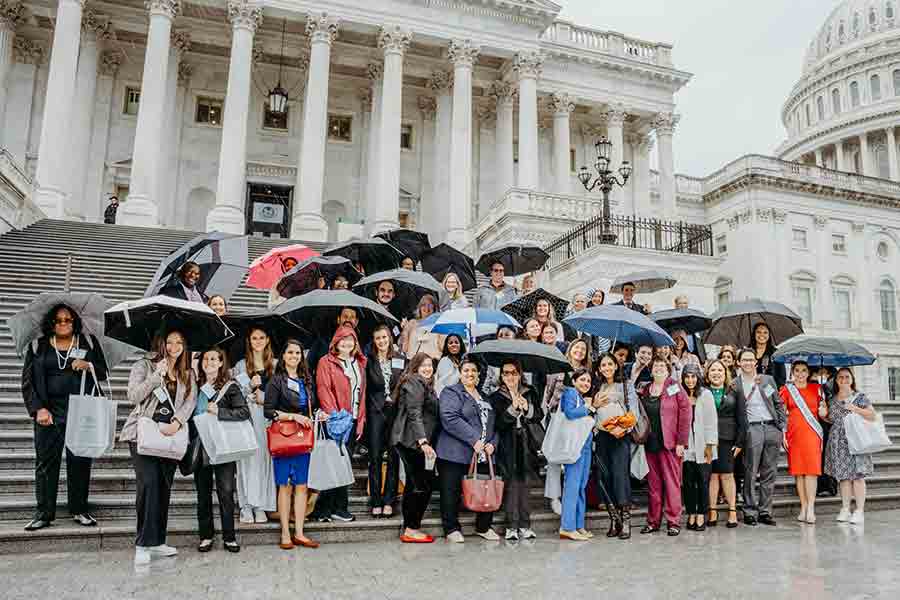
Highlights from May 6, 2026 AADCH:
- 130 advocates from 26 states attended in person (including 8 young advocates who added a special energy to the day!)
- Advocates took part in 119 meetings with members of Congress on May 6.
- 493 advocates participated in our online campaign, sending 2,167 emails to members of Congress on May 6.
Policy Priorities
- Improve access to safe and effective medical care and treatment.
- Continue asthma and allergy funding for programs supported by federal agencies.
- Reduce health risks for asthma and severe allergy emergencies.
- Reduce environmental health hazards to support lung health.